
Masculinizing Chest Contouring
in Seattle, WA
Dr. Gougoutas offers personalized treatments for both transfeminine and transmasculine patients, prioritizing safety, individuality, natural-looking results, and patient empowerment every step of the way.
Dr. Gougoutas offers female-to-male (FtM) and female-to-nonbinary (FtN) chest contouring to Seattle patients who are ready to feel aligned and confident in their bodies. During your initial consultation, you and Dr. Gougoutas will discuss your goals and options in detail.
Get In TouchTable of Contents
- See Results From Actual Patients: Gender Affirming Chest Contouring Before & After Pictures
- What Our Patients Have to Say: Gender Affirming Chest Contouring Surgery Testimonials
- Why Choose Dr. Alexander Gougoutas for Your Gender Affirming Chest Contouring in Seattle?
- Gender Affirming Chest Contouring Cost in Seattle
- What Is Gender Affirming Chest Contouring?
- Am I a Candidate for Masculinizing Chest Contouring?
- How Is Chest Contouring Performed?
- How to Prepare for FtM Top Surgery
- Chest Masculinization Recovery & Aftercare
- What Results Can I Expect?
- Gender Affirming Chest Contouring Surgery FAQs
See Results From Actual Patients: Gender Affirming Chest Contouring Before & After Pictures


This 48-year-old patient underwent gender affirming chest contouring, free nipple grafting, and a lateral axillary lift, as shown in the circled area. The lateral axillary is an extension of the incision under the arm to improve contouring and smooth the sides and underarms. The chest incision was connected across the midline to improve contour and prevent “dog ears” in the middle of the chest (excess folds of skin at the end of the incision). Post-operative photos taken at ~3 months.

This 20-year-old patient had gender affirming chest contouring with free nipple grafts. The incision was connected across the midline to improve contour and prevent “dog ears” in the middle of the chest (excess folds of skin at the end of the incision). Tattoos have been edited to maintain anonymity. Post-operative photos taken at ~3 months.

This 22-year-old patient had gender affirming chest contouring without free nipple grafts. The incision was connected across the midline to improve contour and prevent “dog ears” in the middle of the chest (excess folds of skin at the end of the incision). Post-operative photos taken at ~3 months. Note the presence of dog ears along the sides of both chest incisions, which will require future revision.
See More Gender Affirming Breast Augmentation Results
What Our Patients Have to Say: Gender Affirming Chest Contouring Surgery Testimonials
I recently underwent gender affirmation top surgery with Dr. Alexander Gougoutas, and I cannot express enough how exceptional my experience was. From the initial consultation to post-operative care, Dr. Gougoutas and his team were outstanding every step of the way.
Dr. Gougoutas is not only highly skilled but also incredibly kind and compassionate. He took the time to thoroughly explain the procedure, involving me in the decision-making process and ensuring that I fully understood all of my options and the potential outcomes. His ability to communicate complex medical information in an easy-to-understand manner was truly appreciated.
Throughout my journey, Dr. Gougoutas consistently showed respect for my identity and was affirming in every aspect of my transition. His professionalism and genuine care made me feel comfortable and supported throughout the entire process.
I also want to acknowledge the entire office staff, who were equally supportive and attentive. From scheduling appointments to answering questions, they made the entire process smooth and stress-free.
I highly recommend Dr. Alexander Gougoutas. My experience with him and his team was overwhelmingly positive, and I am incredibly grateful for the care I received.
Gender Affirming Chest Contouring Cost in Seattle
Most of the gender affirming procedures Dr. Gougoutas performs are eligible for insurance coverage. Coverage varies by policy and provider, but many insurance plans now recognize gender affirming chest and breast surgery as medically necessary. Transmasculine chest contouring (with or without free nipple grafting or keyhole) is typically submitted to insurance.
Dr. Gougoutas does not, however, accept insurance for aesthetic contouring. These procedures include liposuction (body or chest wall contouring), breast lift, lateral chest wall skin tightening, and additional body contouring, all of which are considered cosmetic, self-pay procedures. When these are performed alongside an insurance-covered surgery, they may be billed as a split-case, meaning part is insurance and part is self-pay.
During your consultation, you will receive a detailed cost estimate and guidance on the insurance approval process.
Learn More About Your Insurance Submission
In order to submit gender affirming procedures for insurance coverage, at least two supportive letters, one from a mental health professional with whom you’ve had a long-standing relationship (>6 months) and one from a primary care physician, must be provided. Different insurance companies have unique requirements, and therefore, additional documentation may be required.
Critical components of a supportive letter for gender affirming top surgery include, but are not limited to:
- A diagnosis of gender dysphoria
- Surgical preparedness documentation
- Psychosocial evaluation
- Informed consent
- Absence of surgical contraindications
A complete guide to requirements for gender affirming top surgery can be found here.
Why Choose Dr. Alexander Gougoutas for Your Gender Affirming Chest Contouring in Seattle?
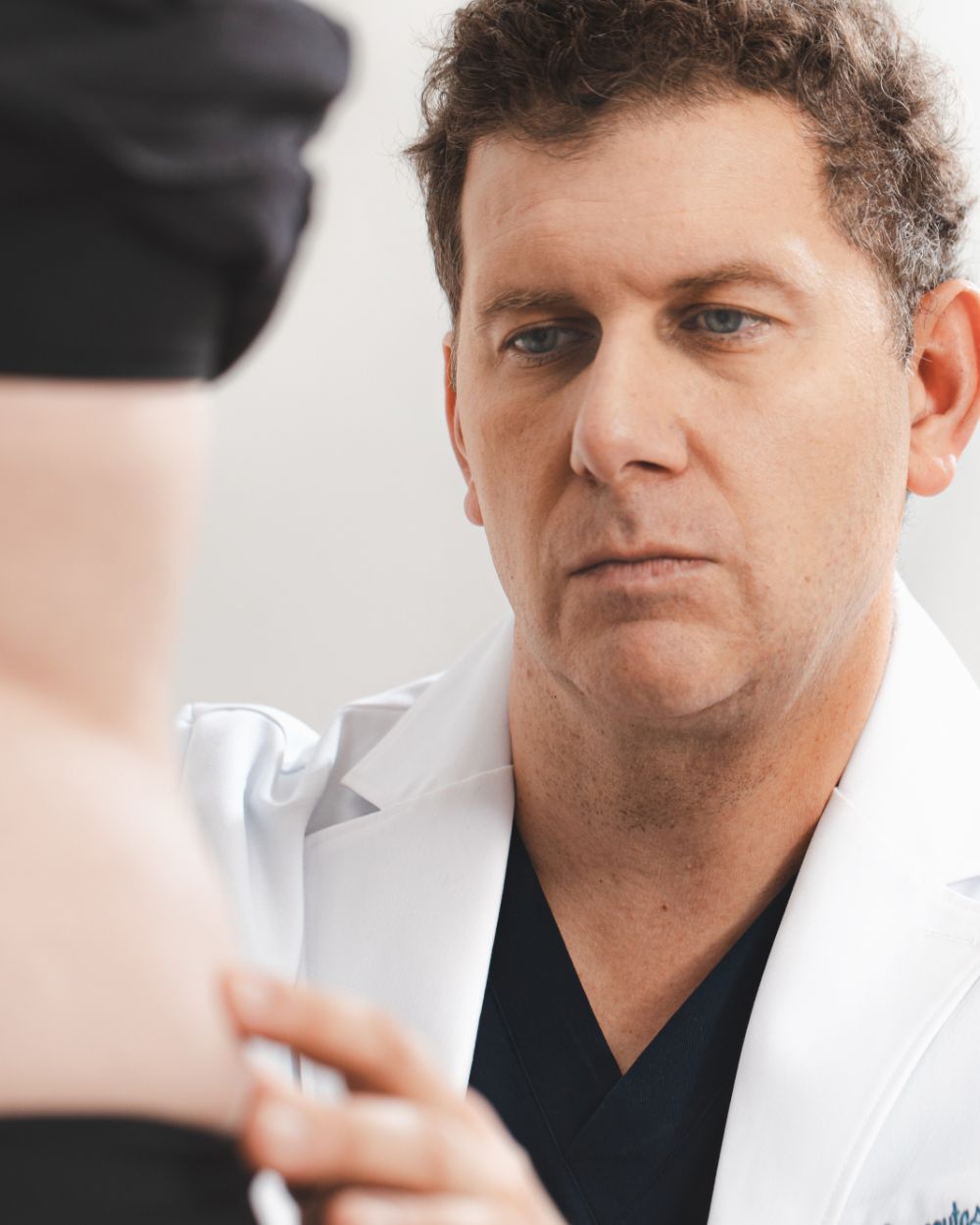
Dr. Alexander Gougoutas is a board-certified plastic and reconstructive surgeon with advanced training in microsurgery and aesthetic surgery of the breast and body.
Dr. Gougoutas has extensive experience in surgeries of the breast, with a robust background in implant-based and autologous breast reconstruction. Patients trust Dr. Gougoutas for his compassionate, respectful communication. His expertise allows him to create harmonious results—whether through chest contouring with or without nipple grafting or ancillary cosmetic procedures of the breast and body. His commitment to patient education, long-term follow-up care, and support sets him apart as the top choice for gender affirming care in Seattle. Dr. Gougoutas understands this journey is personal, and his goal is to help you feel affirmed, supported, and confident.
What Is Gender Affirming Chest Contouring?
The terms “chest contouring,” “top surgery,” and “gender affirming mastectomy” are often used interchangeably. While “chest contouring” and “top surgery” are accurate terms, the term “gender affirming mastectomy” is misleading and inaccurate. A mastectomy typically refers to the removal of all breast tissue to either treat or prevent breast cancer. In chest contouring surgery, some breast tissue is intentionally left behind to help shape and contour the chest, and is therefore not synonymous with a mastectomy.
For our purposes, we will use the term “chest contouring.” Chest contouring removes variable amounts of breast tissue, fat, and skin to reshape the chest with a flatter contour. Goals typically include creating a more masculine or neutral chest contour, complete with nipple reduction and repositioning, or even removal. This is accomplished by either:
- Double-incision with or without free nipple grafting: This method is ideal for individuals with larger, ptotic breasts. It involves removing breast tissue and excess skin, relocating the nipple-areola complexes to a higher position on the chest, and reattaching them as “grafts.”
- Keyhole or periareolar techniques: These techniques are best for candidates with minimal breast tissue and excess skin. Tissue is removed through a small incision made on the lower half of the areola. Very few patients are candidates for this procedure.
Dr. Gougoutas does not perform radical breast reduction or any bottom surgeries. This allows him to focus his expertise on top surgery to ensure exceptional outcomes.
Am I a Candidate for Masculinizing Chest Contouring?
You may be a good candidate for gender affirming chest contouring if you are:
- In good overall health
- BMI (Body Mass Index) <38 (Patients with a BMI of 40 or greater are not candidates)
- Do not consume nicotine
- Clear about your transition goals
- Experiencing discomfort or dysphoria related to your chest appearance
- Interested in obtaining a more masculine or neutral chest appearance
- Realistic about surgical expectations and recovery

How Is Chest Contouring Performed?
Regardless of technique, chest contouring is performed under deep sedation. You will be breathing on your own for the procedure and not require a breathing tube down your throat. You will, however, feel no pain, be aware of the surgery in any way while it is being performed, nor remember anything about the surgery itself.
Masculinizing Chest Contouring Options (FtM)
Double Incision with or without Free Nipple Grafting
In this procedure, incisions are placed in the existing folds of the breasts, starting near the armpit and running towards the breastbone. The breasts are draped over these folds, and all skin/breast tissue that hangs below the fold is removed. The remainder of the breast tissue is thinned as it approaches the collar bone to give a flat, or slightly convex shape to the chest wall. The incisions are closed under some tension so as to avoid curvilinear incisions and flatten out the fold under the breast. Nipples are typically downsized and repositioned on the chest wall to a higher, more lateral position as skin grafts.
It should be noted that classically, a double incision technique results in just that, double incisions that run from roughly the armpits to the sides of the breast bone. Dr. Gougoutas offers a variation of this technique that results in a single incision crossing the breastbone. His technique evolved to avoid tissue redundancy and mid-chest bumps, which occur ~50% of the time. Patients often find these “dog ears” distressing and seek revision. By running the incision along the midline, a smooth, natural contour is guaranteed at the first surgery. (link to picture)
Keyhole Approach
The “keyhole” approach describes the ultimate incision on the breasts—one that circles the areola and extends down toward the breast fold at the six o’clock position (like a keyhole). In this technique, excess breast tissue is removed through the vertical incision. The skin is then tightened on either side of the vertical incision and around the areola, which is typically downsized but not moved on the chest wall, unlike in free nipple grafting.
Both procedure options require the placement of one surgical drain in each breast.
Additional Cosmetic Add-on Procedures
Dr. Gougoutas may recommend additional, self-pay procedures to enhance your new chest contour. These may include liposuction of the sides of the chest and fat pads above the breasts near the armpit, or an extended incision to maximally contour the tissue under the arm as it approaches the back (Lateral Axillary Lift).
How to Prepare for FtM Top Surgery
The keys to preparing for chest contouring are, first and foremost, having a clear understanding of your surgical plan. Dr. Gougoutas will meet with you at least once after your initial consultation to review your surgical plan and answer any questions you may have. Once your surgical plan has been developed and your surgery date is set, you will need to:
- Stop smoking and use of nicotine products at least three weeks before and after your procedure
- Avoid certain medications as directed
- Arrange for a trusted support and caregiver for at least the first 24–48 hours
- Prepare your home with recovery essentials (pillows, loose clothing, medications, snacks)
These steps will help you prepare for a smooth, safe recovery. Dr. Gougoutas will provide more information during your consultation.
Chest Masculinization Recovery & Aftercare
Post-operative discharge instructions for chest contouring can be found on our Discharge Instructions page.
Recovery varies depending on the procedure and your individual healing process. Dr. Gougoutas and his team will provide detailed aftercare instructions and closely monitor your recovery during all follow-up visits. He and his team are always available should you have any questions or concerns during your recovery.
After surgery, you will wear surgical dressings and a compression vest, with drains in place. Some soreness or tightness is expected during the early recovery phase.
Most patients can return to work and light activity in one to two weeks. Strenuous activity should be avoided for at least four to six weeks.
What Results Can I Expect?
While there will be noticeable changes right away, your results will evolve gradually as swelling resolves and tissues settle in place. Many patients report a profound sense of alignment, comfort, and freedom after healing.
Improvements often include:
- A chest appearance that is flat or slightly convex and matches your identity
- Better-fitting clothing
- An improved silhouette with loss of feminine breast mounds
- Increased confidence and emotional comfort
- The ability to “pass” as your identified gender
Results are long-lasting, provided you maintain a healthy lifestyle and a stable weight.
Does insurance cover my gender affirming surgery?
Yes, it can. Most top surgeries are submitted to insurance. Coverage varies by plan. Requirements vary by plan. Our team can help guide you through the process.
Do I need to stop hormones before surgery?
In most cases, this isn’t necessary. The ultimate decision depends on your health history and the procedure. Dr. Gougoutas will advise you during your consultation.
Can I drive after top surgery?
No, you cannot operate a vehicle after receiving sedation or while on opioid pain medication. You need a trusted friend, family member, or professional caregiver to drive you to and from surgery and to stay with you for at least the first evening after surgery.
Can I customize my results?
To a certain extent. The decision to keep your nipples is entirely up to you. Scarring and healing can be unpredictable, and therefore, if you do decide to keep your nipples, you have only limited input on their ultimate position and size. The ultimate shape and position of the incision(s) can also be unpredictable, but you do have input as to whether the scar crosses the midline and how it curves along the lateral chest wall. Every surgical plan is designed around your anatomy, preferences, and goals, and Dr. Gougoutas will work with you as much as possible to give you your desired results.
What procedures are cosmetic only?
Liposuction, skin tightening beyond the armpit and into the back, and other body contouring procedures are cosmetic and may require self-pay or split-case billing.
What are the risks of chest contouring surgery?
The least predictable element of the operation is how well you scar. Scars may widen over time, but also fade, flatten, and soften over the course of a year. Additional rare risks include fluid collections that may go away on their own or need to be drained surgically, asymmetry to the incisions, and partial or complete loss of the nipple areola complex.
Will I get sensation back in my nipples if I have free nipple grafting performed?
Generally no. That said, a very small number of patients may experience some return of sensation to the grafted nipples one to two years after surgery, though it never returns to pre-surgery levels.
What are “dog ears” exactly?
“Dog ears” is a non-technical term that refers to small bumps or pouches of tissue that accumulate at either end of a linear incision. If small enough, dog ears may go away on their own over time. If they are large, however, they will likely require surgical correction. We tend to think only about dog ears developing at the sides of incisions closest to the armpits in chest contouring surgery. However, if your incision(s) do not cross the midline, there is a ~30–40% chance that dog ears can develop near the breast bone as well. This can be avoided by connecting the incisions in a gentle arc across the breastbone.
Book Your Gender Affirming Surgery Consultation
If you are ready for your body to reflect who you are, Dr. Gougoutas and his team are here for you. To schedule your consultation, call (206) 320-6138 or complete our online contact form today.